
On Sept. 29, the State Department announced that starting next year, people applying for their first US passport can do the whole thing online. Before this, first-timers had to show up in person. Someone looked at your face, looked at your documents, and made sure the two matched.
That in-person check is going away, which puts a lot of weight on digital identity verification.
The government hasn't said yet how it will verify applicants, so I'll be upfront: I don't know how they're designing this, and nobody outside that team does either. What I can do is walk through what a safe version would need, where it could break, and what it means for teams that run KYC onboarding every day.
TL;DR: What do online passports mean for digital identity verification?
A safe online process needs more than a selfie and a driver's license. It needs five checks to pass together: SSA verification of name, DOB and SSN; validation of the driver's license against the issuing state's records; electronic verification of a birth record as proof of citizenship; a selfie with strong liveness detection, and a one-to-many face search across State's existing photo records. Built that way, it should be fairly secure, but onboarding teams should watch it closely.
The main risk is an impostor using their own face, not a deepfake of you. A fraudster who forges a license with your details and their photo passes liveness and face match. The passport then carries their face, so it works at the border too.
Liveness still matters, but it isn't the whole defense. It has to catch presentation and camera injection attacks. It can't catch a real person holding a forged license.
Citizenship has to be proven, not assumed. SSN and license checks don't establish citizenship.
Address signals matter more than device data. Watch for new or thin address history, repeated addresses, and PO boxes.
A fraudulent passport is useful everywhere. It can open accounts and loans, and, if issued with the fraudster's photo, cross borders.
Who can actually use a fraudulent passport?
My honest first thought was that this could be a goldmine for passport fraud. A US passport is a big prize, and a lot of people would want one.
It's tempting to think the risk is limited because the fraudster's face won't match the victim's at the border. That only holds if the fraudster has to look like the victim. In practice, they don't. The classic attack is a "fraudulently obtained genuine" passport: a real passport, issued on fake supporting documents, carrying the fraudster's own photo and someone else's identity.
This isn't hypothetical. In 2009, GAO investigators obtained four genuine passports using counterfeit documents and the SSNs of fictitious or deceased people. One investigator then used a passport to buy an airline ticket, clear airport security, and board a plane (Nextgov, GAO-09-447). In a 2010 follow-up, State issued five of the seven passports GAO attempted to get (GAO-10-922T).
So a fraudulent passport is useful in two places: opening accounts and applying for loans, which is what KYC teams care about, and crossing borders, which is what the State cares about.
What would a secure online passport process need?
If I were designing this, I'd want five checks, and I'd want an applicant to pass all of them before anything gets issued. Each one covers a gap the others leave open.
Check | What it confirms | What it doesn't confirm |
|---|---|---|
1. SSA verification | Name, DOB, and SSN match SSA records; flags SSNs SSA lists as deceased | Identity or citizenship (SSA) |
2. License validation against the issuing state (AAMVA's verification service) | The license number and details match what the DMV issued | That the photo on the card is the DMV's photo |
3. Birth record verification (EVVE) | A matching birth record exists in the state of birth | That the applicant is that person |
4. Selfie with liveness detection | A live person matches the photo on the license | That the license photo is genuine |
5. One-to-many face search | This face hasn't appeared under another identity in State's records | Anything about a first-time fraudster with no prior record |
None of this process should be low friction. If anything fails, the applicant should be sent to apply in person.
A real ID tells you a document is real, but it takes more signals than that to know the person is.
Where could digital identity verification break?
From the fraudster's perspective, SSA verification isn't much of a barrier. Name, date of birth, and SSN are table stakes; so much data is already out there.
The forged license is the weakest link. A fraudster needs a license with the victim's details and, in the impostor scenario, their own photo. Right now, there’s no way to check that the photo on a driver’s license or state ID matches what the DMV has on file. However, where a state offers a signed mobile driver's license, verifying its cryptographic signature is stronger than inspecting an image of a plastic card.
Document verification looks for tampering, and the barcode on the back of a license encodes the same name, date of birth and address as the front. But barcodes can be spoofed, and a forgery that copies real license details will also pass a data check against the DMV. Once the license is accepted, liveness and face match can't help: they confirm that a real person matches the card, not that the card is genuine. This is where the one-to-many face search and the address controls carry weight.
Fake live selfies come in two main forms:
Presentation attacks. The fraudster holds a photo or screen up to the camera. Good presentation attack detection looks at depth, lighting and other cues, and can tell it isn't a person.
Camera injection attacks. A fake video is fed in between the camera and the app, like a man-in-the-middle attack on your webcam. What the app receives isn't what the camera sees.
Put it all together and my take is that faking all five checks at once is much harder than it sounds. Not impossible, and the forged license is where I'd expect attackers to focus.
Why isn't this a fraud-at-scale problem?
Beating a selfie check is no longer a one-off effort, because injection tools are now sold off the shelf and can be reused across attempts. What’s hard to reuse is everything around the selfie: a convincing forged license for each identity, a verifiable birth record for each identity, and a delivery address the fraudster controls. And if State runs a one-to-many face search, each attacker’s face can only be used once. As long as those controls are in place, this stays targeted and slow.
It also changes which signals matter. When fraud happens at scale, device and IP data is very useful, because the same device or IP keeps showing up. The people capable of beating these checks are sophisticated and cycle through devices and IPs all the time. Device and behavioral intelligence is still a good control against less sophisticated fraudsters, but here it has to work alongside other signals instead of carrying the decision.
Are other high-assurance IDs going digital?
High-assurance IDs are already becoming more digital. In California, I don't need to carry my physical driver's license anymore. I can add it to my phone's wallet and use that instead.
But look at how the DMV handles the risky moments. I can renew my license online, and the new card gets mailed to the address on file. If I change my address, I have to come in. If I change my name, same thing. And as far as I know, I can't get my first license online at all.
That tells you where identity assurance really sits. If someone wants to take over my license, they also need access to my address to receive it. The address is doing a lot of work.
What should KYC onboarding teams watch?
When people are asked to scan an ID during onboarding, most reach for a driver’s license or state ID rather than a passport. Far more Americans carry a driver’s license than a valid passport. So this isn’t a flood of risky passports arriving tomorrow.
Still, there are a few signals I'd put more weight on in onboarding workflows:
Address history. If the address on an application is new to that identity and has very little history behind it, that's a strong signal. A passport gets shipped somewhere, and a fraudster needs that somewhere to be a place they control.
Address velocity. If several applications have come in using the same address, pay attention.
PO boxes. You don't want passports, or new accounts, tied to a PO box.
How the passport was issued. If there's ever a way to know a passport was issued fully online, with no in-person step, that itself is a useful signal. I wouldn't decline on it alone, but it's a good reason to give the application a higher risk score and look closer.
A watch-closely moment
Overall, if the government builds this with checks like the ones above, I think it'll be fairly secure for now. But it's definitely a watch-closely moment. People will try to break it, and over the next year, the news will tell us whether anyone is getting IDs in someone else's name.
In the meantime, the best move for onboarding teams is the same as it's always been: don't let one document carry the whole decision. A real ID tells you a document is real, but it takes more signals than that to know the person is.
The fraudsters who can beat a liveness check can usually beat traditional device fingerprinting too. Our on-demand webinar, Beyond Traditional Device Intelligence: The Future of Digital Identity & Fraud Prevention, covers what it takes to catch them.
FAQs
Can you apply for a first-time US passport online?
Not yet. The State Department announced on Sept. 29 that first-time applicants will be able to apply fully online starting next year. Until then, first-time applicants still have to apply in person.
What is digital identity verification?
Digital identity verification confirms that a person is who they claim to be without meeting them in person. It usually combines a data check (like name, date of birth and SSN), a check of a government ID document, and a selfie with liveness detection to confirm a real person is present.
What's the difference between a presentation attack and an injection attack?
In a presentation attack, a fraudster shows the camera something fake, like a printed photo or a screen. In a camera injection attack, they skip the camera entirely and feed fake video straight into the app. Injection attacks are harder to catch because the app never sees what's actually in front of the camera.
Could a fraudster get a real passport in someone else's name?
Yes, and it’s happened before. In 2009 and 2010, GAO investigators got genuine passports using counterfeit documents. Online, the likeliest attack is a forged driver’s license with the victim’s details and the fraudster’s own photo, which can pass liveness and face match. That’s why a secure process also needs birth record verification, a one-to-many face search, and address controls.”
What is eCBSV?
eCBSV is the Social Security Administration's electronic Consent Based SSN Verification service. With the person's consent, it confirms whether a name, date of birth and Social Security number match SSA records. It’s how financial institutions run the same SSN check during KYC onboarding..
Should KYC teams treat passports differently now?
Not overnight. Passports are a small share of IDs used in onboarding, and online issuance hasn't started. But it's worth giving more weight to address history, address velocity and PO boxes, and to watch for any way to tell how an ID was issued.
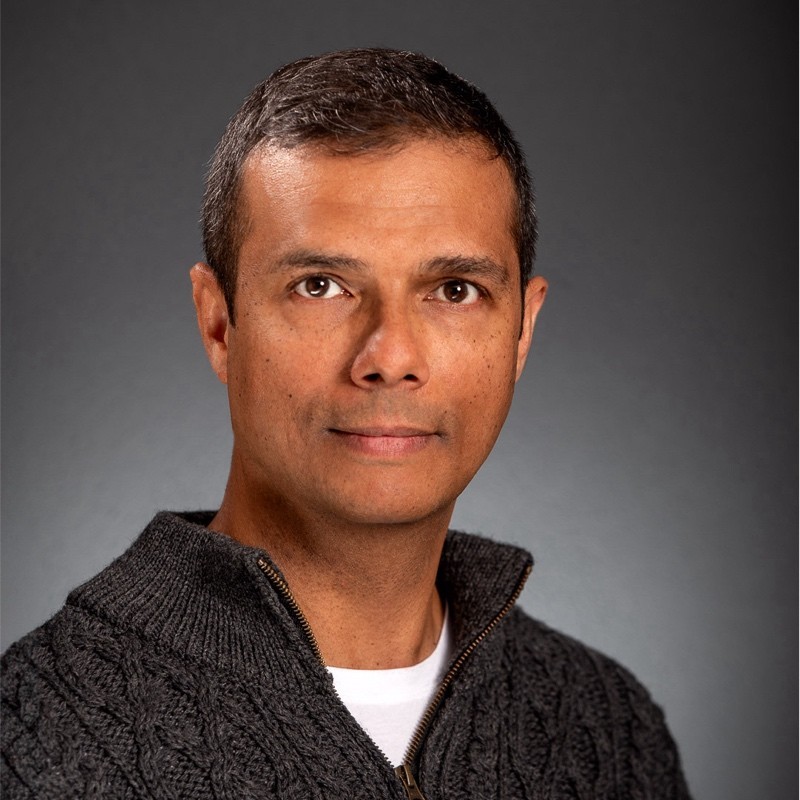
Anurag Chowdhury
Director of Fraud and Risk


" height="48px" id="Qi9pnIQwR" width="48px"/></g></svg>)
" height="39.77194px" id="A8r2uGwai" transform="translate(2 3.808)" width="44px"/></svg>)


" height="22.301126233991734px" id="PeyDPUyWO" transform="translate(45.365 4.852)" width="20.043580159797898px"/><path d="M 13.46 11.116 C 12.368 10.493 10.888 9.973 9.024 9.556 C 7.664 9.236 6.613 8.927 5.887 8.624 C 5.155 8.321 4.647 7.979 4.355 7.59 C 4.064 7.201 3.921 6.704 3.921 6.104 C 3.921 5.184 4.269 4.447 4.972 3.898 C 5.675 3.349 6.624 3.069 7.83 3.069 C 8.79 3.069 9.607 3.241 10.282 3.578 C 10.951 3.921 11.482 4.401 11.876 5.018 C 12.265 5.641 12.511 6.361 12.614 7.184 L 16.1 6.973 C 15.94 5.63 15.523 4.435 14.854 3.383 C 14.185 2.332 13.265 1.503 12.105 0.903 C 10.945 0.303 9.539 0 7.899 0 C 6.355 0 5.024 0.263 3.904 0.783 C 2.783 1.303 1.92 2.035 1.32 2.978 C 0.72 3.921 0.417 5.001 0.417 6.224 C 0.417 7.344 0.646 8.281 1.109 9.036 C 1.572 9.785 2.315 10.419 3.349 10.928 C 4.384 11.436 5.755 11.905 7.481 12.328 C 9.024 12.688 10.19 13.059 10.985 13.442 C 11.774 13.825 12.311 14.237 12.591 14.688 C 12.871 15.14 13.014 15.666 13.014 16.266 C 13.014 16.906 12.848 17.455 12.517 17.906 C 12.185 18.358 11.705 18.695 11.076 18.912 C 10.448 19.135 9.676 19.243 8.779 19.243 C 7.739 19.243 6.847 19.072 6.104 18.735 C 5.361 18.392 4.778 17.883 4.344 17.203 C 3.915 16.523 3.629 15.689 3.486 14.711 L 0 14.923 C 0.103 16.403 0.514 17.7 1.246 18.798 C 1.977 19.901 2.972 20.764 4.235 21.381 C 5.498 22.004 6.99 22.313 8.71 22.313 C 10.27 22.313 11.636 22.061 12.797 21.564 C 13.957 21.061 14.871 20.341 15.528 19.398 C 16.191 18.455 16.523 17.346 16.523 16.06 C 16.523 15.02 16.289 14.094 15.814 13.282 C 15.346 12.471 14.563 11.756 13.471 11.133 Z" fill="rgb(20, 20, 20)" height="22.312556870217108px" id="ZaBOTiDLx" transform="translate(68.34 4.858)" width="16.522951309374434px"/><path d="M 13.682 17.877 C 12.751 18.792 11.442 19.243 9.762 19.243 C 8.522 19.243 7.43 18.923 6.504 18.283 C 5.572 17.643 4.847 16.723 4.326 15.517 C 3.806 14.317 3.543 12.871 3.543 11.191 C 3.543 9.51 3.801 8.093 4.309 6.876 C 4.818 5.664 5.544 4.727 6.487 4.064 C 7.43 3.401 8.533 3.069 9.79 3.069 C 11.373 3.069 12.619 3.486 13.534 4.315 C 14.443 5.149 15.031 6.281 15.294 7.727 L 18.901 7.544 C 18.438 5.178 17.472 3.332 16.003 2 C 14.528 0.669 12.459 0 9.796 0 C 7.83 0 6.115 0.457 4.641 1.366 C 3.166 2.28 2.029 3.572 1.217 5.241 C 0.406 6.916 0 8.893 0 11.179 C 0 13.465 0.412 15.494 1.235 17.146 C 2.058 18.798 3.201 20.072 4.675 20.964 C 6.15 21.855 7.847 22.301 9.767 22.301 C 11.528 22.301 13.054 21.975 14.334 21.324 C 15.614 20.672 16.654 19.752 17.443 18.558 C 18.232 17.363 18.758 15.957 19.021 14.334 L 15.443 14.151 C 15.203 15.711 14.614 16.952 13.682 17.86 Z" fill="rgb(20, 20, 20)" height="22.301126257066386px" id="dj2F9fN0f" transform="translate(87.772 4.841)" width="19.020540282808156px"/><path d="M 0 21.335 L 0 0 L 3.423 0 L 3.423 21.335 Z" fill="rgb(20, 20, 20)" height="21.335239445830055px" id="fvIs54YbW" transform="translate(110.485 5.332)" width="3.423468638642248px"/><path d="M 3.429 0 L 0 0 L 0 21.341 L 13.762 21.341 L 13.762 18.272 L 3.429 18.272 Z" fill="rgb(20, 20, 20)" height="21.340954752405395px" id="KykvynROU" transform="translate(118.389 5.332)" width="13.762458233473922px"/><path d="M 9.859 3.303 L 16.077 21.335 L 19.684 21.335 L 11.991 0 L 7.693 0 L 0 21.335 L 3.635 21.335 L 9.853 3.303 Z" fill="rgb(20, 20, 20)" height="21.33523944583004px" id="Ln_a1JZTX" transform="translate(133.986 5.338)" width="19.683515845550573px"/><path d="M 11.545 12.499 C 12.968 12.059 14.043 11.322 14.774 10.293 C 15.506 9.259 15.871 8.024 15.871 6.584 C 15.871 4.521 15.191 2.909 13.825 1.743 C 12.465 0.583 10.539 0 8.053 0 L 0 0 L 0 21.335 L 3.423 21.335 L 3.423 13.071 L 8.201 13.071 L 12.802 21.335 L 16.529 21.335 L 11.539 12.499 Z M 11.173 9.116 C 10.402 9.705 9.327 10.002 7.944 10.002 L 3.435 10.002 L 3.435 3.058 L 7.944 3.058 C 9.327 3.058 10.402 3.361 11.173 3.961 C 11.945 4.561 12.328 5.435 12.328 6.573 C 12.328 7.71 11.945 8.522 11.173 9.11 Z" fill="rgb(20, 20, 20)" height="21.335239490803623px" id="Qt9AxOqZR" transform="translate(156.099 5.338)" width="16.528666547835087px"/><path d="M 33.9 0.006 L 25.607 0.006 C 25.213 0.006 24.875 0.291 24.818 0.674 C 24.687 1.555 24.47 2.4 24.19 3.201 C 23.224 5.978 21.44 8.27 19.194 9.682 L 19.217 9.682 C 19.217 9.682 25.453 9.522 27.539 3.201 L 27.539 3.201 L 30.859 3.201 C 29.482 7.161 26.459 10.133 22.778 10.968 C 22.098 11.122 21.4 11.202 20.68 11.202 C 19.514 11.202 18.394 10.991 17.343 10.596 C 14.233 9.436 11.719 6.698 10.501 3.195 C 10.216 2.389 10.004 1.543 9.873 0.669 C 9.816 0.28 9.478 0 9.084 0 L 0.803 0 C 0.317 0 -0.061 0.434 0.008 0.914 C 0.117 1.697 0.277 2.458 0.488 3.201 C 2.3 9.687 7.672 14.397 14.005 14.403 C 10.924 13.357 6.106 10.436 3.837 3.201 L 3.837 3.201 L 3.837 3.201 L 7.158 3.201 C 8.027 6.298 9.707 9.002 11.919 10.968 C 13.496 12.374 15.342 13.408 17.354 13.957 C 18.423 14.248 19.543 14.403 20.692 14.403 C 27.03 14.403 32.408 9.687 34.22 3.201 C 34.426 2.463 34.586 1.697 34.7 0.914 C 34.769 0.434 34.391 0 33.906 0 Z" fill="rgb(20, 20, 20)" height="14.402572631835938px" id="yxyckXN6_" transform="translate(0 17.597)" width="34.708059114564385px"/><path d="M 0.803 14.403 L 9.095 14.403 C 9.49 14.403 9.827 14.117 9.884 13.734 C 10.016 12.854 10.233 12.008 10.513 11.208 C 11.479 8.43 13.256 6.138 15.497 4.727 L 15.479 4.727 C 15.479 4.727 9.244 4.887 7.158 11.208 L 7.158 11.208 L 3.837 11.208 L 3.837 11.208 C 5.209 7.247 8.238 4.269 11.913 3.435 C 12.593 3.281 13.29 3.201 14.011 3.201 C 15.176 3.201 16.297 3.412 17.348 3.806 C 20.457 4.967 22.972 7.704 24.19 11.208 L 24.19 11.208 L 24.19 11.208 C 24.475 12.014 24.687 12.859 24.818 13.734 C 24.875 14.123 25.213 14.403 25.607 14.403 L 33.9 14.403 C 34.386 14.403 34.763 13.968 34.694 13.488 C 34.586 12.711 34.426 11.945 34.214 11.202 C 32.408 4.721 27.024 0 20.686 0 C 23.767 1.046 28.59 3.961 30.865 11.208 L 30.865 11.208 L 27.544 11.208 L 27.544 11.208 L 27.544 11.208 C 26.681 8.104 24.995 5.407 22.784 3.435 C 21.206 2.029 19.36 1 17.354 0.446 C 16.28 0.154 15.165 0 14.016 0 C 7.672 0 2.294 4.721 0.488 11.208 L 0.488 11.208 L 0.488 11.208 C 0.282 11.951 0.122 12.711 0.008 13.494 C -0.061 13.974 0.317 14.408 0.803 14.408 Z" fill="rgb(20, 20, 20)" height="14.408287876490093px" id="fJajgayao" width="34.70234380798904px"/></g></svg>)