
Deloitte published its 2026 Technology Fast 500 this week, and Oscilar is No. 32. The list ranks North American technology companies on revenue growth from fiscal 2022 through 2025. Ours was 2,513%, in the first year Oscilar was eligible for the list, and it puts us among the ten fastest-growing fintech companies on it and top five in the Bay Area.
I thought I would have more to say when I saw Oscilar at No. 32. Instead, I kept thinking about how little a growth percentage tells you about building a company. It doesn't capture the uncertainty, the difficult decisions, or the customers who trusted us before we had much to show them. Looking back, two decisions made the biggest difference.
The two bets we made before our first customer
The first bet was to fund the company ourselves. We spent about two years in stealth with a small team of engineers, with the autonomy to build the foundation we believed the market needed, even if it took longer to sell. Revenue imposes a discipline that a funding round does not: every expansion had to be paid for by an institution that believed the product deserved its money. We had to earn every customer twice, first by convincing them to trust us with a consequential part of their business, and then by giving them a reason to renew.
The second bet was to build the platform before the product that would sell fastest. The fast path was to ship a fraud model, win a customer and move on. We built one real-time view of the customer across onboarding, fraud, credit and compliance first, and put the models and agents on top of it. Over the years that meant turning down faster revenue from customers who wanted a narrower solution, and living with the risk that someone else would win the market while we built.
Before there was a product, I interviewed close to 100 risk leaders and showed them prototypes until they told me they would buy it. Then, in May 2022, we took our first booth: a startup table at Fintech Nexus in New York, a small fold-up table with a monitor on it. People who knew me from Confluent were surprised to see me on the show floor behind it. I understood the surprise. To me it was simply how you start. We signed our first customer from that table.
More than 100 banks, lenders, fintechs and payments companies make their risk decisions on Oscilar today, and many have handed us more of their risk stack every year since they signed. Those customers are what sits underneath the 2,513%.
What I learned at Confluent (and what I had to unlearn)
Confluent is on this year's list too, at No. 498. Two companies I helped start, on the same list, ranked by the same measure. I did not expect that to move me as much as it did.
Kafka taught me that the hard part of a technology company is the foundation. It also showed me where Oscilar would come from. At Confluent, some of the most sophisticated banks streamed their data in real time, then handed it to fraud, credit and AML systems that each saw one slice of the customer. They had real-time data and fragmented risk. Oscilar exists to close that gap.
What I had to unlearn was the habit of comparison. Confluent grew through open source and a community of developers. Oscilar grows one regulated institution at a time, often after months of proving that we can be trusted with consequential decisions. Early on, I caught myself measuring one against the other. I eventually understood that a second company doesn't inherit the first one's path. You have to earn the right to build it all over again.
Better risk decisions protect more people
Fraud has changed faster than the systems built to stop it. INTERPOL estimates that global fraud losses reached $442 billion in 2025, and reports that AI-enhanced fraud is about 4.5 times more profitable than traditional methods. In the US, people over 60 reported $7.7 billion in internet crime losses to the FBI last year. Behind those numbers are people losing money they may never recover.
Our customers face this problem every day. Attackers can adapt in minutes, while many risk teams still depend on rules that take months to change. Institutions need to move faster, without compromising accountability.
They also need to get better at recognizing legitimate customers. When a risk system is too blunt, good people get turned away, and that falls hardest on borrowers with limited credit histories, who have fewer ways to show they are creditworthy. Many of the lenders we serve use alternative data to say yes to those borrowers responsibly.
This is why we built Oscilar around a unified view of the customer. AI agents assemble context, surface recommendations and document their reasoning, while people keep responsibility for policy and oversight. Our customers' teams have reduced false positives by 45%, reviewed alerts three times faster and deployed new policies five times faster. SoFi, MoneyGram and Uphold have told their own stories publicly, and I would rather you read their words than mine.
The next challenge: Knowing when to trust an AI agent
AI agents have begun transacting on people's behalf. Every institution now has to decide, in real time, whether the agent in a session is legitimate and whether the transaction it is attempting makes sense. We are building for it now, before the traffic arrives.
The people behind the 2,513%
To our customers: you took a chance on a self-funded company with a large claim, and you kept renewing as we proved it.
To our advisors, who told us the truth when it was inconvenient, and our partners, who carried us into rooms we could not have entered alone: thank you.
To my co-founder Sachin, and to every person at Oscilar: this number is your work.

Oscilar's Chief Product Officer, Saurabh Bajaj, accepted the award on behalf of the team.
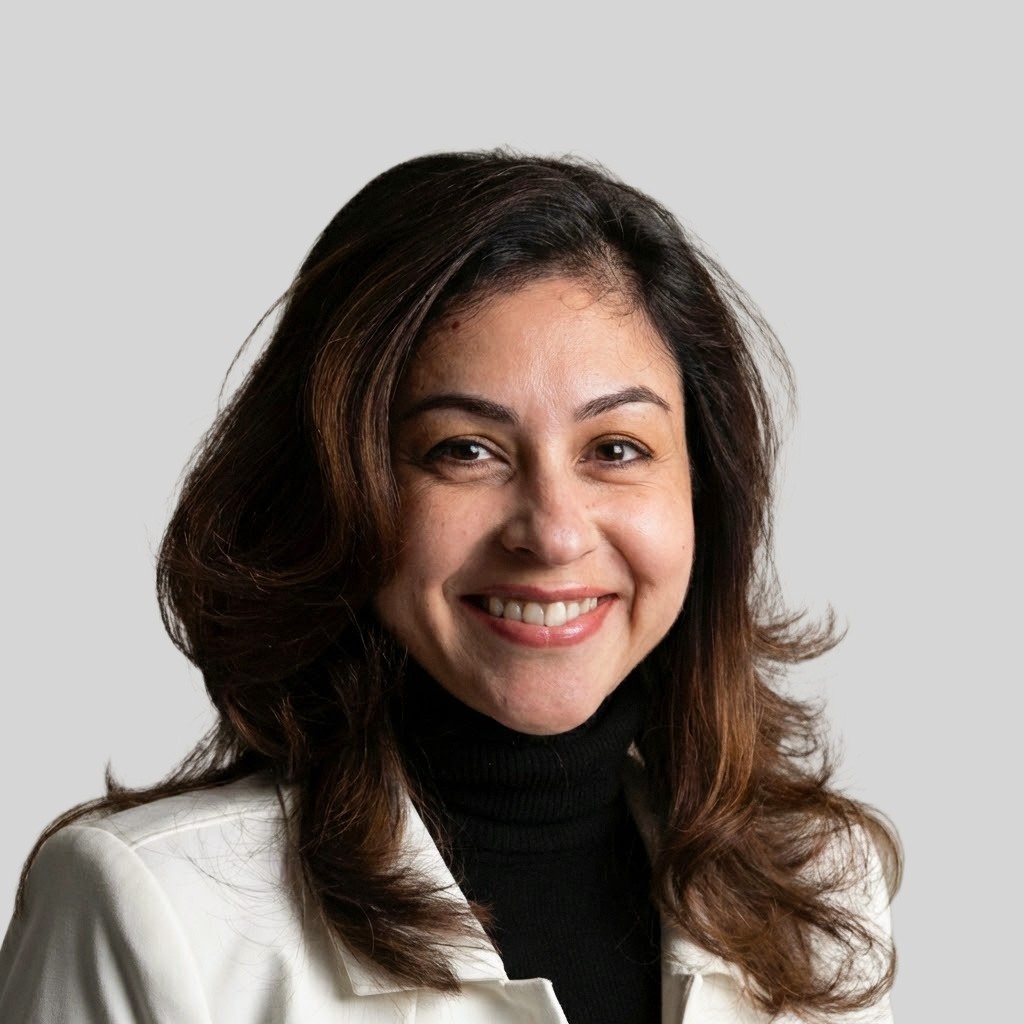
Neha Narkhede
CEO and Co-Founder
Neha Narkhede is a technology entrepreneur and investor. She is co-founder and CEO of Oscilar, the AI risk decisioning platform, and co-founder and board director of Confluent. Neha is a co-creator of Apache Kafka, which she built while leading the Kafka team at LinkedIn, and is an investor or advisor to companies including Material Security, Stytch, Supabase, and Yugabyte. She studied computer science at Georgia Tech and grew up in Pune, India.
DISCLAIMER
The content on this website is provided for informational purposes only and does not constitute legal, tax, financial, investment, or other professional advice. Any views or opinions expressed by quoted individuals, contributors, or third parties are solely their own and do not necessarily reflect the views of our organization.
Nothing herein should be construed as an endorsement, recommendation, or approval of any particular strategy, product, service, or viewpoint. Readers should consult their own qualified advisors before making any financial or investment decisions.
Oscilar makes no representations or warranties as to the accuracy, completeness, or timeliness of the information provided and disclaims any liability for any loss or damage arising from reliance on this content. This website may contain links to third-party websites, which Oscilar does not control or endorse.


" height="48px" id="Qi9pnIQwR" width="48px"/></g></svg>)
" height="39.77194px" id="A8r2uGwai" transform="translate(2 3.808)" width="44px"/></svg>)

