
The United States Department of Justice has recently executed the largest asset forfeiture in its history, seizing 127,271 bitcoins – worth about $15 billion – from Chen Zhi, the founder and chairman of Cambodia’s Prince Holding Group.
Behind this staggering figure lies a disturbing reality: hundreds of trafficked workers confined in forced-labor compounds, tortured into operating an industrial-scale romance scam that destroyed lives across dozens of countries.
TL;DR
The U.S. seized $15 billion in bitcoin from a Cambodian empire built on torture, trafficking, and industrial-scale crypto scams.
Chen Zhi’s network enslaved thousands to run AI-enhanced romance scams that drained $64 billion a year from victims worldwide.
The case exposes how traditional compliance systems failed, unable to detect coordinated fraud powered by automation and AI.
Regulators now demand real-time, intelligent fraud prevention - making platforms like Oscilar essential infrastructure for digital finance’s future.
The Prison Factories Behind Your Dating App Match
Chen operated at least ten scam compounds across Cambodia, where trafficked workers managed some 1,250 mobile phones and controlled 76,000 social media accounts simultaneously. Workers were lured with promises of legitimate tech jobs, only to find themselves behind barbed wire in prison-like dormitories. Internal communications recovered by investigators describe Chen approving gruesome punishments for workers who underperformed – cautioning only that they should not be “beaten to death,” a chilling indication of how far the torture went.
These weren’t amateur operations. Recruits received detailed training on crafting authentic profiles, maintaining fabricated identities, and executing sophisticated psychological manipulation across multiple platforms. Recordkeeping was meticulous and even involved automated call centers – thousands of phones working in unison – underscoring the scheme’s advanced organization.
The sheer scale transformed what was once an opportunistic crime into a systematized enterprise rivaling a legitimate multinational corporation. Each scam “call center,” often fronting as a tech or finance firm, could generate hundreds of millions or even billions in annual revenue.
How Pig Butchering Scams Drain Billions
The term pig butchering derives from the tactic of fattening victims with trust before the financial slaughter. Perpetrators spend weeks or months cultivating relationships through dating apps and social media – establishing romantic connections or offering investment advice – before guiding victims toward fraudulent cryptocurrency platforms that display fake profits. Once the victim’s trust (and investment) has been sufficiently “fattened,” the scammers vanish along with the funds.
The psychological manipulation proves devastatingly effective. Americans reported losing a record $16.6 billion to online scams in 2024, with cryptocurrency investment fraud alone accounting for about $5.7 billion of that total. Globally, losses to pig-butchering scams are estimated to reach around $64 billion per year – an almost unfathomable toll in stolen wealth and ruined lives.
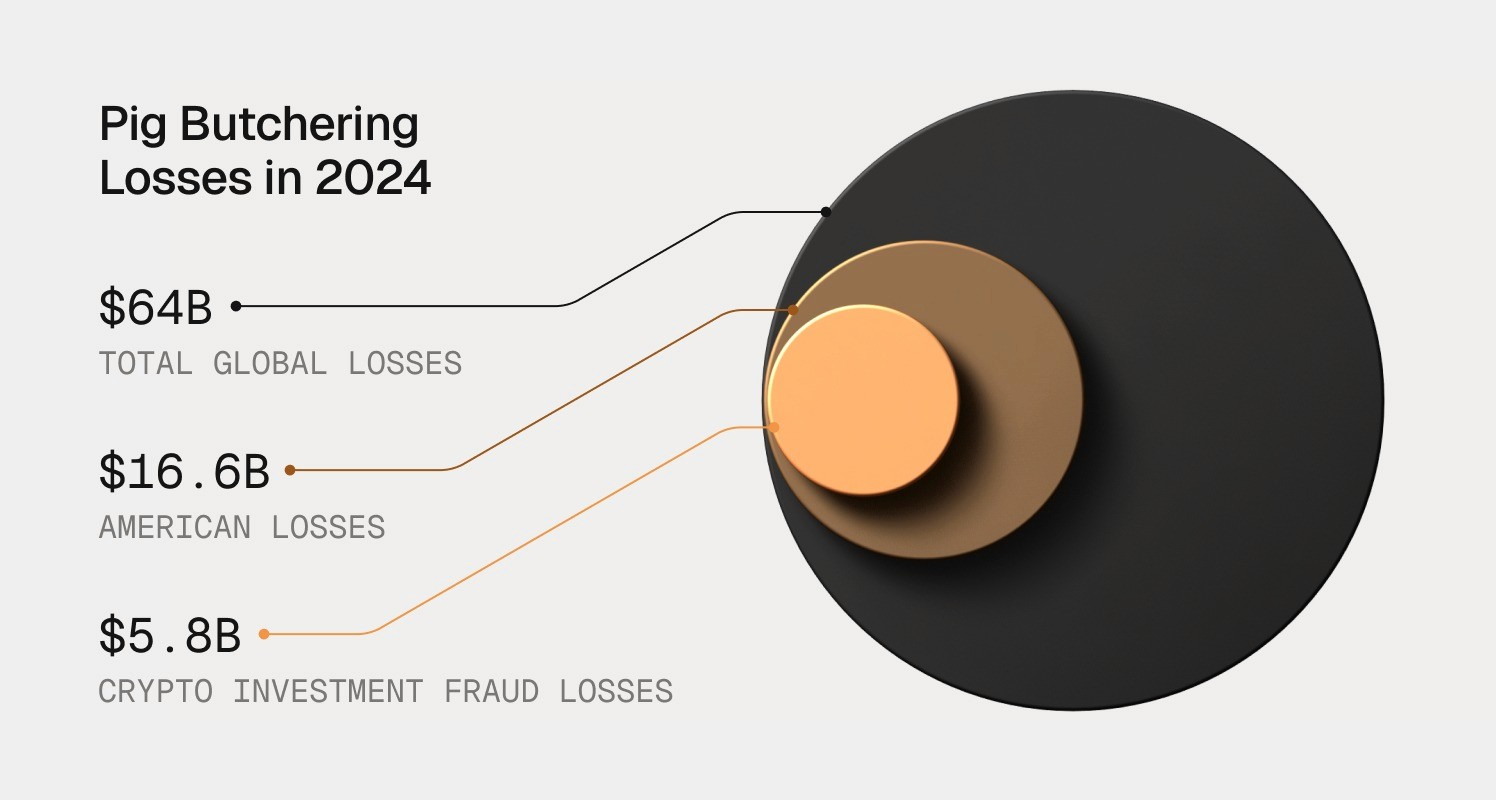
The laundering infrastructure behind these schemes matches their front-end sophistication. Crime networks used a web of cryptocurrency mining ventures, shell companies spanning multiple jurisdictions, and systematic “smurfing” techniques to wash the proceeds. Blockchain analysis even traced about $1.77 billion in illicit funds flowing into wallets controlled by Chen over a two-and-a-half-year period – merely a fraction of the total illicit flows generated by the empire. Investigators found that Prince Group integrated scam operations into real estate projects and corporate shells from Hong Kong and Singapore to Palau and the Cayman Islands, creating a maze designed to obscure the origin of fraud proceeds.
Why Traditional Defenses Failed Catastrophically
This case exposes a fundamental truth: rule-based compliance systems alone cannot counter adaptive, AI-enhanced fraud operations. When criminals deploy industrial infrastructure managing tens of thousands of accounts with human-like behavior, traditional transaction monitoring rules often prove obsolete before they’re even implemented. Static defenses simply cannot keep pace with fast-evolving tactics that leverage artificial intelligence to evade detection.
This is precisely where next-generation platforms like Oscilar become essential – not just as a competitive advantage, but as core infrastructure.
Oscilar’s behavioral intelligence platform analyzes over 1,000 unique cognitive, device, and network markers in real time, identifying patterns that simplistic rule-based systems entirely miss. With decision-making occurring in under 100 milliseconds, the platform can flag suspicious activity during customer onboarding and throughout the transaction lifecycle – exactly the moments when pig-butchering schemes attempt to establish their foothold.
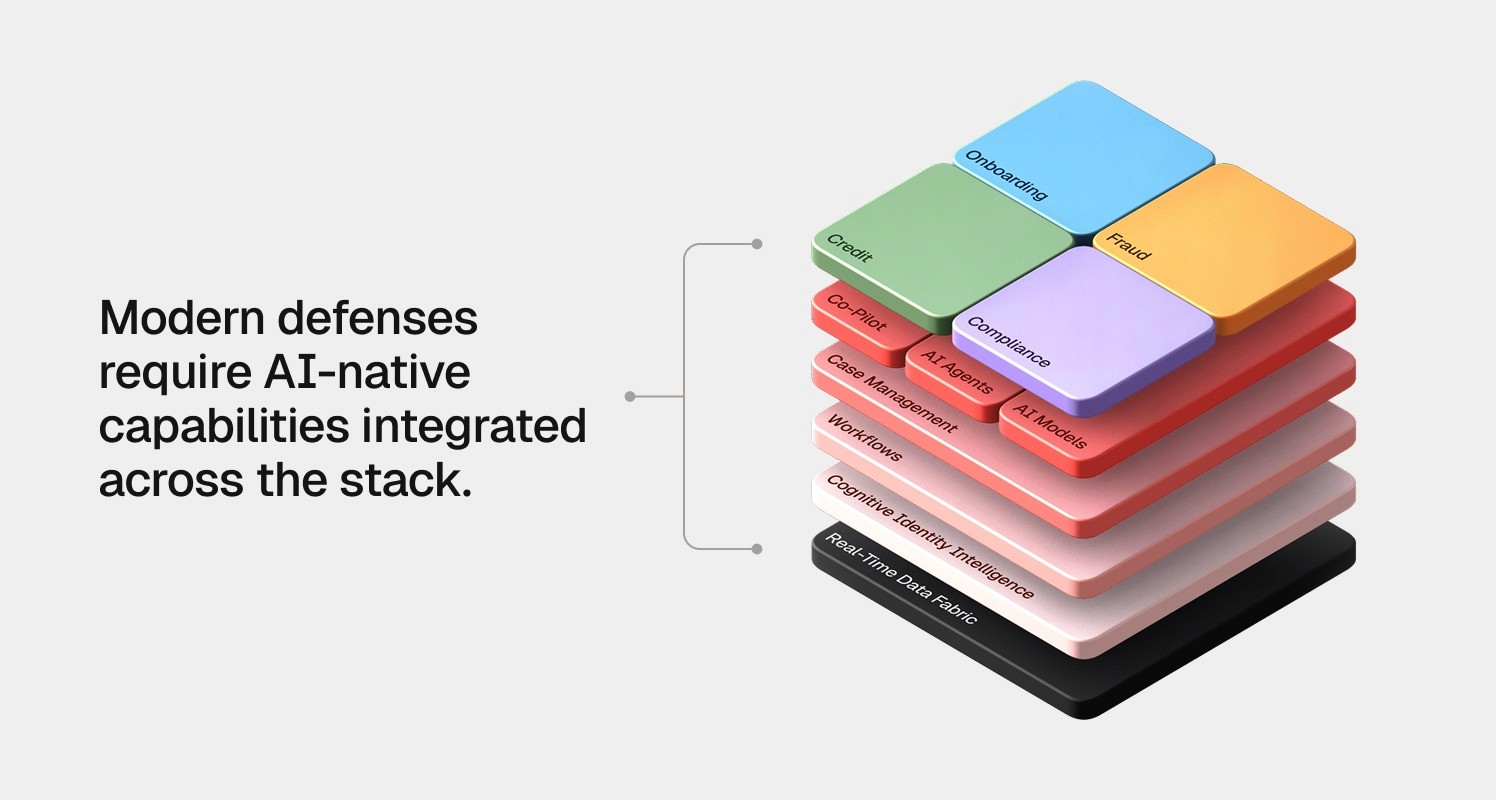
Device fingerprinting and entity relationship mapping further reveal the hidden network connections that isolated transaction reviews overlook, exposing coordinated fraud rings before they can scale up. For example, if the same device is used to verify “unique” identities or open multiple accounts, it’s a red flag traditional checks might miss – but advanced device intelligence can unmask these fraud rings in real time.
The Regulatory Earthquake Coming for FinTech
The coordinated U.S.-UK enforcement action in October 2025 – which sanctioned 146 entities linked to the scam network and severed the notorious Huione Group from the U.S. financial system – establishes a precedent for unprecedented international cooperation. This whole-of-government strike, involving indictments, sanctions, and FinCEN’s Section 311 action, signals that regulators worldwide are uniting against these cyber-fraud empires.
Financial institutions should anticipate that regulators will soon require real-time fraud detection capabilities and automated risk-scoring systems capable of spotting anomalous patterns before damage occurs. In the UK, for example, new rules forcing banks to reimburse scam victims are already driving adoption of real-time monitoring that can intercept scams mid-stream. We can expect similar pressure elsewhere.
Regulatory bodies will demand enhanced due diligence on cryptocurrency transactions – rigorous identity verification, proof-of-funds, and transparent beneficial ownership – to choke off scam funding channels. Multilateral information-sharing frameworks will also strengthen, particularly across Southeast Asia where these operations have been concentrated.
Notably, the human trafficking dimension of pig-butchering introduces compliance obligations that transcend traditional anti-money-laundering rules. These scams are built on modern slavery: as U.S. officials and the UN have highlighted, hundreds of thousands of people have been enslaved and brutalized to run scam centers in Southeast Asia. Regulators now expect financial institutions to actively help prevent and report transactions linked to such exploitation. FinCEN’s recent alert on pig-butchering urged banks to file SARs (Suspicious Activity Reports) not only to flag fraud, but also to aid victims and help law enforcement track down perpetrators. In short, banks and fintechs must demonstrate that their systems can detect and disrupt modern slavery in their customer and transaction data, not inadvertently facilitate it.
Organizations deploying advanced fraud prevention now gain a crucial head start. Oscilar’s AI-powered risk decisioning platform, for instance, combines behavioral biometrics, machine learning models, and continuous monitoring to build layered defenses matching the sophistication of these industrialized fraud operations. As regulatory requirements intensify, firms that already have such capabilities in place will meet the new standards seamlessly – while competitors scramble to retrofit inadequate legacy systems.
What This Means for Digital Finance’s Future
The evolution is clear: next-generation fraud prevention demands integrated artificial intelligence, behavioral analytics, device intelligence, and network analysis all working in concert. The recent $15 billion bitcoin seizure is a watershed moment, but Chen Zhi remains at large and similar operations are rapidly proliferating across the Middle East, Europe, and Africa. Law enforcement and threat researchers have uncovered pig-butchering offshoots on multiple continents – from scam compounds in Dubai to rings in Eastern Europe and West Africa – often linked back to the same syndicates and tactics honed in Southeast Asia. The alleged mastermind in this case has not been arrested and continues to elude authorities, underscoring that the threat is far from eliminated.
Financial institutions now face a decisive choice. Those investing proactively in intelligent fraud-prevention platforms like Oscilar are positioning themselves to protect customers effectively while satisfying the coming wave of stringent regulations. Those clinging to legacy approaches, however, will find themselves dangerously vulnerable – exposed to catastrophic fraud losses on one side and to regulatory penalties on the other – as enforcement standards rise to match the cunning of modern criminal enterprises.
The convergence of forced labor, advanced fraud techniques, and cryptocurrency exploitation in this saga demands an equally multifaceted response. The technology does exist to identify and prevent these operations before they ensnare the next victim or launder the next billion in stolen funds.
The key question now is whether financial institutions will deploy these tools before the next $15 billion cyber-slavery empire emerges – or only after they become its unwitting accomplices.


Linas Beliūnas
Former Content Strategist
Linas is a business developer, sales professional, and FinTech strategist with over six years of experience driving innovation in financial services. Passionate about leveraging technology to reinvent finance, he has worked across leading institutions—including Western Union, Danske Bank, and Norne Securities—before focusing fully on FinTech. Linas is particularly interested in digital banking, payments, emerging technologies, and blockchain and cryptocurrency. He shares insights with a global audience of 116,000+ professionals through his newsletter at linas.substack.com.




" height="48px" id="Qi9pnIQwR" width="48px"/></g></svg>)
" height="39.77194px" id="A8r2uGwai" transform="translate(2 3.808)" width="44px"/></svg>)


" height="22.301126233991734px" id="PeyDPUyWO" transform="translate(45.365 4.852)" width="20.043580159797898px"/><path d="M 13.46 11.116 C 12.368 10.493 10.888 9.973 9.024 9.556 C 7.664 9.236 6.613 8.927 5.887 8.624 C 5.155 8.321 4.647 7.979 4.355 7.59 C 4.064 7.201 3.921 6.704 3.921 6.104 C 3.921 5.184 4.269 4.447 4.972 3.898 C 5.675 3.349 6.624 3.069 7.83 3.069 C 8.79 3.069 9.607 3.241 10.282 3.578 C 10.951 3.921 11.482 4.401 11.876 5.018 C 12.265 5.641 12.511 6.361 12.614 7.184 L 16.1 6.973 C 15.94 5.63 15.523 4.435 14.854 3.383 C 14.185 2.332 13.265 1.503 12.105 0.903 C 10.945 0.303 9.539 0 7.899 0 C 6.355 0 5.024 0.263 3.904 0.783 C 2.783 1.303 1.92 2.035 1.32 2.978 C 0.72 3.921 0.417 5.001 0.417 6.224 C 0.417 7.344 0.646 8.281 1.109 9.036 C 1.572 9.785 2.315 10.419 3.349 10.928 C 4.384 11.436 5.755 11.905 7.481 12.328 C 9.024 12.688 10.19 13.059 10.985 13.442 C 11.774 13.825 12.311 14.237 12.591 14.688 C 12.871 15.14 13.014 15.666 13.014 16.266 C 13.014 16.906 12.848 17.455 12.517 17.906 C 12.185 18.358 11.705 18.695 11.076 18.912 C 10.448 19.135 9.676 19.243 8.779 19.243 C 7.739 19.243 6.847 19.072 6.104 18.735 C 5.361 18.392 4.778 17.883 4.344 17.203 C 3.915 16.523 3.629 15.689 3.486 14.711 L 0 14.923 C 0.103 16.403 0.514 17.7 1.246 18.798 C 1.977 19.901 2.972 20.764 4.235 21.381 C 5.498 22.004 6.99 22.313 8.71 22.313 C 10.27 22.313 11.636 22.061 12.797 21.564 C 13.957 21.061 14.871 20.341 15.528 19.398 C 16.191 18.455 16.523 17.346 16.523 16.06 C 16.523 15.02 16.289 14.094 15.814 13.282 C 15.346 12.471 14.563 11.756 13.471 11.133 Z" fill="rgb(20, 20, 20)" height="22.312556870217108px" id="ZaBOTiDLx" transform="translate(68.34 4.858)" width="16.522951309374434px"/><path d="M 13.682 17.877 C 12.751 18.792 11.442 19.243 9.762 19.243 C 8.522 19.243 7.43 18.923 6.504 18.283 C 5.572 17.643 4.847 16.723 4.326 15.517 C 3.806 14.317 3.543 12.871 3.543 11.191 C 3.543 9.51 3.801 8.093 4.309 6.876 C 4.818 5.664 5.544 4.727 6.487 4.064 C 7.43 3.401 8.533 3.069 9.79 3.069 C 11.373 3.069 12.619 3.486 13.534 4.315 C 14.443 5.149 15.031 6.281 15.294 7.727 L 18.901 7.544 C 18.438 5.178 17.472 3.332 16.003 2 C 14.528 0.669 12.459 0 9.796 0 C 7.83 0 6.115 0.457 4.641 1.366 C 3.166 2.28 2.029 3.572 1.217 5.241 C 0.406 6.916 0 8.893 0 11.179 C 0 13.465 0.412 15.494 1.235 17.146 C 2.058 18.798 3.201 20.072 4.675 20.964 C 6.15 21.855 7.847 22.301 9.767 22.301 C 11.528 22.301 13.054 21.975 14.334 21.324 C 15.614 20.672 16.654 19.752 17.443 18.558 C 18.232 17.363 18.758 15.957 19.021 14.334 L 15.443 14.151 C 15.203 15.711 14.614 16.952 13.682 17.86 Z" fill="rgb(20, 20, 20)" height="22.301126257066386px" id="dj2F9fN0f" transform="translate(87.772 4.841)" width="19.020540282808156px"/><path d="M 0 21.335 L 0 0 L 3.423 0 L 3.423 21.335 Z" fill="rgb(20, 20, 20)" height="21.335239445830055px" id="fvIs54YbW" transform="translate(110.485 5.332)" width="3.423468638642248px"/><path d="M 3.429 0 L 0 0 L 0 21.341 L 13.762 21.341 L 13.762 18.272 L 3.429 18.272 Z" fill="rgb(20, 20, 20)" height="21.340954752405395px" id="KykvynROU" transform="translate(118.389 5.332)" width="13.762458233473922px"/><path d="M 9.859 3.303 L 16.077 21.335 L 19.684 21.335 L 11.991 0 L 7.693 0 L 0 21.335 L 3.635 21.335 L 9.853 3.303 Z" fill="rgb(20, 20, 20)" height="21.33523944583004px" id="Ln_a1JZTX" transform="translate(133.986 5.338)" width="19.683515845550573px"/><path d="M 11.545 12.499 C 12.968 12.059 14.043 11.322 14.774 10.293 C 15.506 9.259 15.871 8.024 15.871 6.584 C 15.871 4.521 15.191 2.909 13.825 1.743 C 12.465 0.583 10.539 0 8.053 0 L 0 0 L 0 21.335 L 3.423 21.335 L 3.423 13.071 L 8.201 13.071 L 12.802 21.335 L 16.529 21.335 L 11.539 12.499 Z M 11.173 9.116 C 10.402 9.705 9.327 10.002 7.944 10.002 L 3.435 10.002 L 3.435 3.058 L 7.944 3.058 C 9.327 3.058 10.402 3.361 11.173 3.961 C 11.945 4.561 12.328 5.435 12.328 6.573 C 12.328 7.71 11.945 8.522 11.173 9.11 Z" fill="rgb(20, 20, 20)" height="21.335239490803623px" id="Qt9AxOqZR" transform="translate(156.099 5.338)" width="16.528666547835087px"/><path d="M 33.9 0.006 L 25.607 0.006 C 25.213 0.006 24.875 0.291 24.818 0.674 C 24.687 1.555 24.47 2.4 24.19 3.201 C 23.224 5.978 21.44 8.27 19.194 9.682 L 19.217 9.682 C 19.217 9.682 25.453 9.522 27.539 3.201 L 27.539 3.201 L 30.859 3.201 C 29.482 7.161 26.459 10.133 22.778 10.968 C 22.098 11.122 21.4 11.202 20.68 11.202 C 19.514 11.202 18.394 10.991 17.343 10.596 C 14.233 9.436 11.719 6.698 10.501 3.195 C 10.216 2.389 10.004 1.543 9.873 0.669 C 9.816 0.28 9.478 0 9.084 0 L 0.803 0 C 0.317 0 -0.061 0.434 0.008 0.914 C 0.117 1.697 0.277 2.458 0.488 3.201 C 2.3 9.687 7.672 14.397 14.005 14.403 C 10.924 13.357 6.106 10.436 3.837 3.201 L 3.837 3.201 L 3.837 3.201 L 7.158 3.201 C 8.027 6.298 9.707 9.002 11.919 10.968 C 13.496 12.374 15.342 13.408 17.354 13.957 C 18.423 14.248 19.543 14.403 20.692 14.403 C 27.03 14.403 32.408 9.687 34.22 3.201 C 34.426 2.463 34.586 1.697 34.7 0.914 C 34.769 0.434 34.391 0 33.906 0 Z" fill="rgb(20, 20, 20)" height="14.402572631835938px" id="yxyckXN6_" transform="translate(0 17.597)" width="34.708059114564385px"/><path d="M 0.803 14.403 L 9.095 14.403 C 9.49 14.403 9.827 14.117 9.884 13.734 C 10.016 12.854 10.233 12.008 10.513 11.208 C 11.479 8.43 13.256 6.138 15.497 4.727 L 15.479 4.727 C 15.479 4.727 9.244 4.887 7.158 11.208 L 7.158 11.208 L 3.837 11.208 L 3.837 11.208 C 5.209 7.247 8.238 4.269 11.913 3.435 C 12.593 3.281 13.29 3.201 14.011 3.201 C 15.176 3.201 16.297 3.412 17.348 3.806 C 20.457 4.967 22.972 7.704 24.19 11.208 L 24.19 11.208 L 24.19 11.208 C 24.475 12.014 24.687 12.859 24.818 13.734 C 24.875 14.123 25.213 14.403 25.607 14.403 L 33.9 14.403 C 34.386 14.403 34.763 13.968 34.694 13.488 C 34.586 12.711 34.426 11.945 34.214 11.202 C 32.408 4.721 27.024 0 20.686 0 C 23.767 1.046 28.59 3.961 30.865 11.208 L 30.865 11.208 L 27.544 11.208 L 27.544 11.208 L 27.544 11.208 C 26.681 8.104 24.995 5.407 22.784 3.435 C 21.206 2.029 19.36 1 17.354 0.446 C 16.28 0.154 15.165 0 14.016 0 C 7.672 0 2.294 4.721 0.488 11.208 L 0.488 11.208 L 0.488 11.208 C 0.282 11.951 0.122 12.711 0.008 13.494 C -0.061 13.974 0.317 14.408 0.803 14.408 Z" fill="rgb(20, 20, 20)" height="14.408287876490093px" id="fJajgayao" width="34.70234380798904px"/></g></svg>)